Wudang Kung Fu Weapons
Wudang Kung Fu Weapons
Rooted in internal boxing, the weapon system of Wudang Kung Fu integrates four major categories: Taoist ritual implements, practical combat weapons, exotic flexible weapons and concealed short-range throwing weapons. Its techniques embody the principles of overcoming hardness with softness and unifying body and weapon, aligning with the Yin-Yang Taiji theory and Bagua stepping methods. Distinct from the fierce external styles of Shaolin, most Wudang weapons serve dual purposes: symbolic cultivation tools and self-defense gear.
Long Weapons (For long-distance strikes, broad and unrestricted movements)
Wudang Sword – The Signature Weapon of Wudang
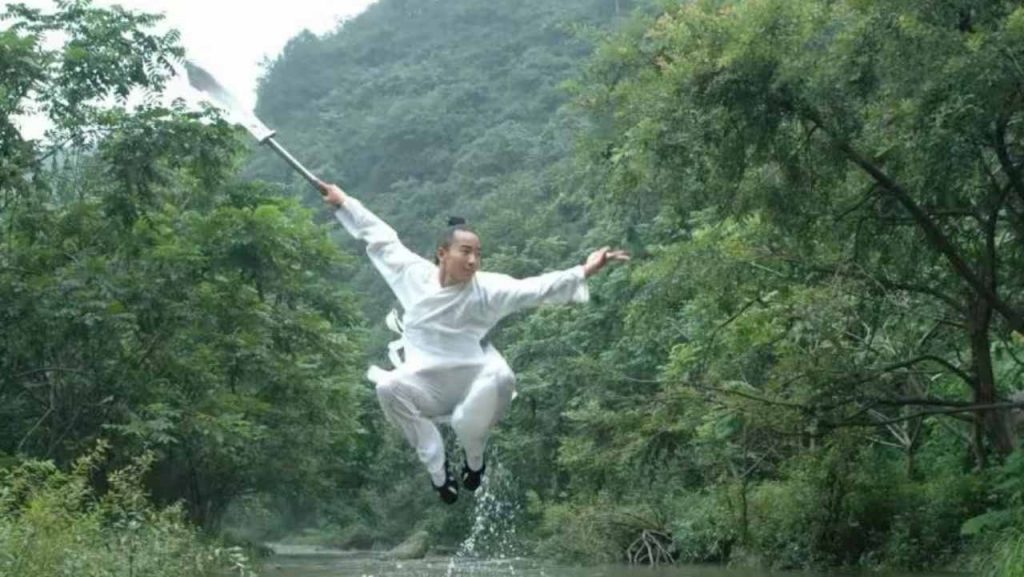
There is a well-known saying: “Shaolin staff, Wudang sword”. As the iconic treasure of the Wudang school, it is reputed to be the mountain-protecting sword created by Zhang Sanfeng, collectively known as the Wudang Dan Sect Swordsmanship.
- Representative routines: Taiyi Xuanyuan Sword, Taiji Sword, Drunken Eight Immortals Sword, Nine Sons Seeking Mother Sword, Chunyang Sword, Snake-Style Sword
- Thirteen core sword techniques: Drawing, Blocking, Lifting, Parrying, Striking, Thrusting, Dotting, Collapsing, Twisting, Sweeping, Pressing, Cutting, Splitting
- Stylistic traits: Governed by “Taiji waist, Bagua steps, Xingyi power, and Wudang spirit”. The sword follows no fixed rigid forms, blending reality and illusion. It flows like floating clouds, prioritizing the harmony of practitioner, sword and spirit. Movements are elegant and restrained, relying on internal energy circulation rather than brute force.
- Taoist cultural symbolism: The three-foot blade severs mortal distractions. Swords are used in temples for exorcism and prayer, standard gear for Taoist wanderers.
Meridian Spear – King of Spears
Representative routine: Seventy-Two Wudang Meridian Spear Forms. A spear delivers linear piercing strikes, the most agile among long weapons.
Its techniques consist of upward framing, downward pressing, forward thrusting, backward reaping, seizing and coiling. Practitioners move in circular arcs, excelling at countering broadswords and staffs. The paired practice routine Thirteen Spears is widely passed down.
Black Tortoise Staff / Reed Staff (Wudang Staff Methods)
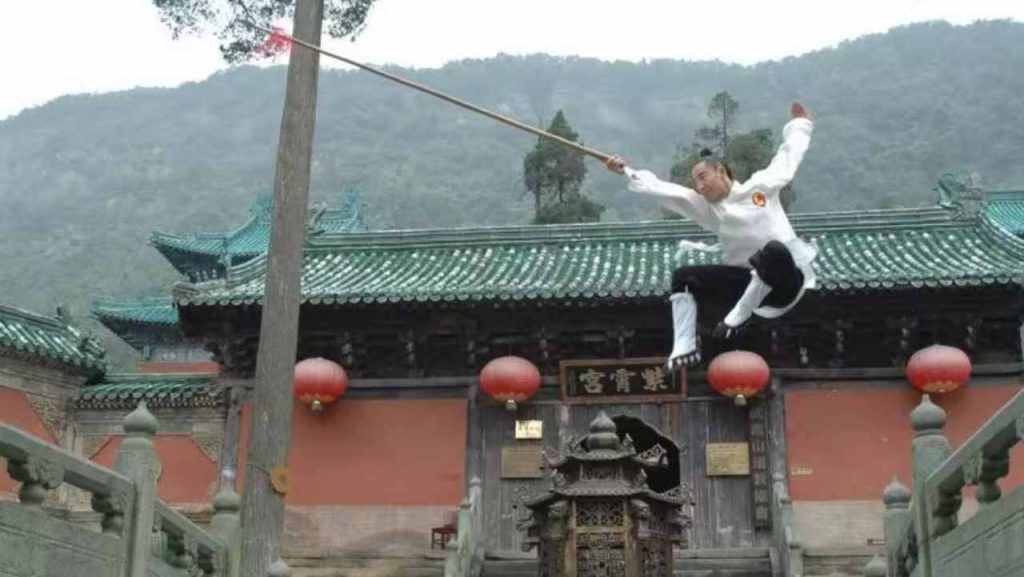
Divided into the long staff and the Songxi staff. A staff delivers wide-sweeping blows with integrated splitting, sweeping, blocking, and sealing techniques. The Reed Staff features concise motions driven purely by circular Taiji energy, deflecting force instead of clashing head-on to intercept and strike opponents. Other inherited routines include the Heavenly Talisman Tiger-Subduing Staff and the Sanfeng Cane (sword techniques adapted for staff).
Spring-Autumn Broadsword
A heavy long weapon with a wide blade and imposing momentum, ideal for building strength through practice. Slow practice nurtures Dantian internal energy, while fast practice fortifies bones and muscles. Its wide, open movements balance attack and defense, mostly performed at temple ceremonies and cultural demonstrations.
Exclusive Taoist Long Weapon: Monk's Spade
A unique exotic long weapon exclusive to Wudang, carried by traveling Taoists in ancient times for trail clearing, burial rites and self-defense. Its structure bears cosmic Taoist symbolism:
- The 1.8-foot spade head symbolizes the eighteen hells; iron rings on both sides stand for Yin and Yang;
- The 3.3-foot shaft represents the thirty-three heavenly realms;
- The 8.6-inch tail corresponds to eight directions, six harmonies, and the Three Treasures of Heaven, Earth and Human.
Its techniques combine the sweeping of staffs, slashing of broadswords and piercing of spears. The complete set of eighty-one forms symbolizes the Nine-Nine Return to the Origin (Taoist ultimate enlightenment).
Short Weapons (Close-quarters combat, nimble control over opponents)
Wudang Broadsword Series
- Night-Travel Broadsword: A distinctive pictographic Wudang blade simulating stealth night combat. Steps revolve around the body with rising and falling energy flow, integrating Taiji, Bagua and Xingyi bodywork. Low stances and circling footwork enable concealed surprise attacks as their core feature.
- Bagua Broadsword / Twin Broadswords: A single broadsword focuses on power circulation, while twin broadswords emphasize circular movements. Matched with circling Bagua steps, the Bagua Broadsword provides tight all-round defense; twin broadswords complement left and right strikes without blind defense gaps.
Tiger-Tail Cudgel (Short Wudang Staff)
Approximately one meter long, also called a whip cudgel. Easily substituted by walking sticks or tree branches. Its techniques merge broadsword chopping, sword thrusting and staff sweeping, specializing in close-range wrist interception and feinting strikes. It follows the principle that all vital combat work lies within one foot of the hands, counterattacking after absorbing enemy force, and remains highly popular for civilian self-defense.
Taiji Iron Rulers (Paired short weapons, natural counter to swords and blades)
Edgeless paired weapons, each 40 to 50 centimeters long, evolved from ancient constable tools and refined with Wudang internal kungfu.
Core moves include coiling, twisting, locking, poking and patting, designed specifically to entrap and disarm bladed weapons. Wooden rulers serve as health-preserving Taiji training gear; twisting and winding movements cultivate Dantian internal energy, making them dual-purpose for kungfu practice and wellness.
Mandarin Duck Crescent Blades (Dragon Crescent Blades)
Classic paired short weapons of the Bagua school, with four sharp points and eight cutting edges shaped like paired sun-moon antlers, wielded in left and right hands to symbolize Qian and Kun (Heaven and Earth). Paired with circling Bagua steps, they excel at close-range winding to seal enemy weapons, defeating long arms with short strikes. Iconic moves include Moon Scooped from the Sea and Coiling Dragon Turn, boasting intricate, varied techniques.
Qiankun Acupuncture Hook
Portable miniature short weapons targeting vital body pressure points. Lightweight and easy to carry for self-defense against short-blade ambushes, its core techniques consist of dotting, framing, blocking and piercing.
Exclusive Taoist Ritual-Combat Hybrid Weapons (Uniting Wudang Kungfu and Spiritual Cultivation)
Taiyi Horsetail Duster
The most recognizable exotic soft weapon of Wudang, carried daily by Taoist priests. Symbolically, it brushes away mortal distractions to purify the mind for spiritual practice.
It features a wooden handle and horsehair filaments as its striking surface, absorbing techniques from swords, whips and folding fans with diverse sweeping, coiling, rolling, dotting and flicking motions. In combat, it tangles and seizes enemy swords and blades; in performances, it delivers elegant, ethereal routines unique to Wudang stage displays.
Soft Weapons and Concealed Throwing Weapons (For long-distance ambushes and surprise strikes)
Soft Weapons
Tiger-Tail Soft Whip, Nine-Section Whip, Meteor Hammer. They deliver circular winding strikes from afar, effective against heavy armor and long-pole weapons.
Traditional Wudang Concealed Throwing Weapons
Rope Dart, Detachable Willow-Leaf Throwing Knives, Single/Plum Blossom Sleeve Crossbows, Grappling Hook Darts, Stabbing Spikes. In ancient times, wandering Taoists carried them for mountain travel safety, prioritizing lightweight, concealment, and precision. Today, they are only preserved as performance routines, with practical combat training rarely passed down.
Core General Characteristics of Wudang Weapons
- Integration of Taoism and Wudang Kungfu
Most weapons carry both spiritual symbolism and combat functionality: swords sever mortal attachments, spades embody heaven-earth cosmology, and dusters purify the heart. All routines contain Taoist philosophies of Yin-Yang, Three Talents, Five Elements, and Eight Trigrams. - Dominance of Internal Energy
Techniques avoid crude brute-force chopping and slashing, prioritizing circular deflection to dissolve hard force. Circular stepping prevails, requiring the body to move before the weapon, guided by intention and internal energy. - Complete, Complementary Long-Short Weapon System
- Long-distance combat: Spears, staffs, spring-autumn broadswords
- Close combat: Broadswords, short cudgels, iron rulers, mandarin duck crescent blades
- Exotic ritual-combat hybrids: Horsetail duster, monk’s spade
- Ambush strikes: Soft weapons and concealed throwing darts
The system covers all attack and defense scenarios comprehensively.
- Ordinary, Concealable Appearance
Short cudgels, iron rulers, dusters, and walking sticks feature inconspicuous shapes easy for Taoist wanderers to carry without drawing attention, matching the humble lifestyle of spiritual practitioners.
Summary of Classic Representative Routines
- Swords: Taiyi Xuanyuan Sword, Taiji Sword, Drunken Eight Immortals Sword, Dan Sect Sword
- Long weapons: Meridian Spear, Black Tortoise Staff, Spring-Autumn Broadsword, Eighty-One Forms Monk’s Spade
- Short weapons: Night-Travel Broadsword, Tiger-Tail Short Cudgel, Taiji Iron Ruler, Mandarin Duck Crescent Blades
- Exotic ritual-combat weapons: Taiyi Horsetail Duster
- Soft & throwing weapons: Nine-Section Whip, Rope Dart, Sleeve Crossbow